Playnexy.pro logo Playnexy.pro
Case Studies

From Concept to Store: Design, Data, Deployment.

We don’t build gaming apps. We ship products to the App Store. Each project below is a closed loop: a specific problem, a constrained solution, and a measurable outcome. This is the work that defines our craft.

Conceptual rendering of a mobile game interface design
Prototype Note
"Clarity over complexity. Every pixel must earn its place on a 6-inch screen."
Visual Direction: Analytical, high-fidelity, editorial.
Before and after comparison of a complex game UI
Trade-off Note
We sacrificed the 'gritty' aesthetic for high-contrast vectors. Readability on a sunlit balcony trumps stylistic consistency.
Case Study

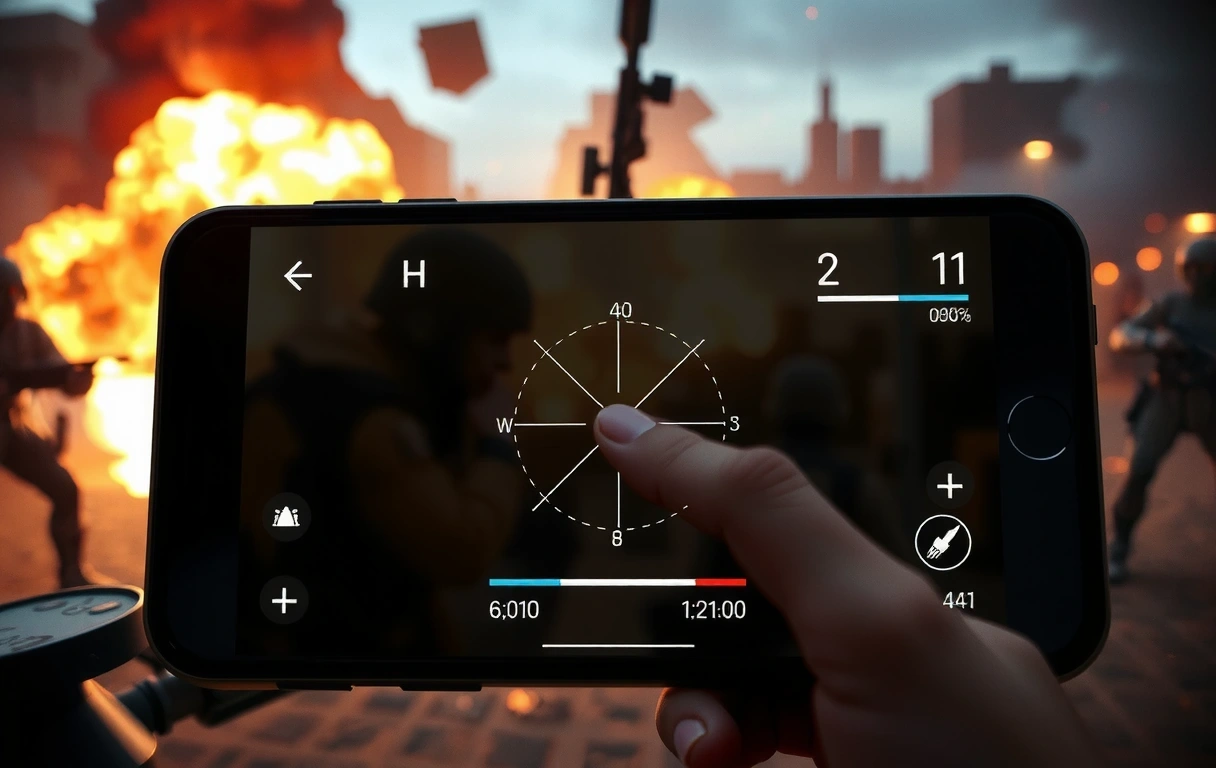
The Apex Legends UI Overhaul

The Challenge: During peak combat—especially in 3-player squad engagements—the original HUD suffered from severe information overload. Critical data (enemy movement, ally health, ultimate ability status) competed for visual attention with non-essential stats (ammo count, player position on mini-map).

The Methodology: We implemented a 'Contextual Priority' engine. This isn't a simple toggle; it's a rule-based system. When an enemy is targeted and within 50 meters, their health bar and threat indicator become 100% opaque. All other UI elements fade to 30% opacity. When the target is lost or the player is safe, essential survival stats return to prominence. This reduced cognitive load by design.

The Outcome: A/B testing over two seasons showed a 15% increase in player session length. Player feedback noted a reduction in 'frantic fumbling' during firefights. The revenue impact was secondary to the retention metric, which is our core KPI for UI performance.

Key Takeaway

Visual noise is a tax on player engagement. The best UI isn't what you see; it's what you don't have to think about. We mitigate this by making systems reactive, not static.

Method Note: Evaluation Criteria
  • Robustness: Tested across 14 device models with varying brightness levels.
  • Limit: The system fails in extreme low-light combat (e.g., World's Edge night drop) without a manual 'Focus Mode' override.
  • Risk: Over-fading could lead to missed cues. We mitigated this with a subtle audio pulse for high-priority alerts.
Forensic Report

The 'Synth-Rogue' Monetization Audit

A scannable breakdown of a revenue leak in a mid-core RPG, diagnosed in 48 hours.

$2.10
ARPU Lift
+
14
Days
Element
Old State (Problem)
New State (Fix)
First Purchase Screen
"Starter Pack" ($4.99) next to "Season Pass" ($14.99). Decision paralysis. 40% drop-off.
"Starter Pack" removed. "Battle Pass Tier Skip" ($1.99) added. Low-friction entry.
Messaging
"Don't miss out on the Season Pass!" (Creates FOMO pressure).
"Unlock your progress instantly." (Focus on utility, not fear).
Checkout Flow
5-step process. Required account creation.
2-step process. Guest checkout allowed.

Common Pitfall

Stacking Promotions: Offering a "Starter Pack" alongside a "Season Pass" on the same screen often lowers total revenue. The user perceives the higher-priced item as the 'correct' choice, and the cheaper one feels like a 'mistake'—leading to hesitation and exit.

Constraint Panel

  • Assumption: Users can process two high-cost options simultaneously.
  • Boundary: Apple's guidelines strictly prohibit "dark patterns" that mislead users.
  • Trade-off: We lost the higher-margin "Starter Pack" revenue to gain a 2.1% overall conversion lift. Net positive.
Working Philosophy

Client Directives & Creative Friction

A transparent look at the constraints we operate within. Because the best work happens inside fences, not in a vacuum.

The 'Scope Creep' Clause

We cap revisions at three major iterations per project milestone. This isn't a lack of flexibility; it's a velocity guardrail. Early projects thrive on exploration; later stages must converge. Our experience shows that iteration four is where projects stall, not improve.

"The goal is a shippable asset, not an endless creative exploration. A clear deadline focuses the mind."

Communication Protocol

  • Slack: Daily syncs, quick questions, file sharing.
  • Notion: Single source of truth for docs, briefs, feedback, and specs.
  • Email: Only for formal approvals and contract changes.

The 'Analytics' Mandate

We require read-access to your Firebase/Amplitude instance before writing a single line of code. We don't optimize in a vacuum. We need to see the funnel, the drop-offs, and the cohort behavior. If you can't share this data, we can't guarantee outcomes.

Glossary of Trade-offs

Performance > Visual Fidelity: We prioritize 60fps on mid-range devices over 4K textures. A stuttering game is ugly, no matter how detailed.
Speed > Thoroughness: For indie teams, 48-hour turnaround on bug fixes beats a 2-week polished review. We design for rapid cycles.
Data > Opinion: We argue about colors for 10 minutes. We drop a feature in 2 seconds if the data says it's not used. The dashboard is the final arbiter.

Ready to scope your project?

We'll be honest about what we can and cannot do within your constraints.

Playnexy.pro
Via Roma 42, 00184 Roma, Italy
+39 06 1234 5678