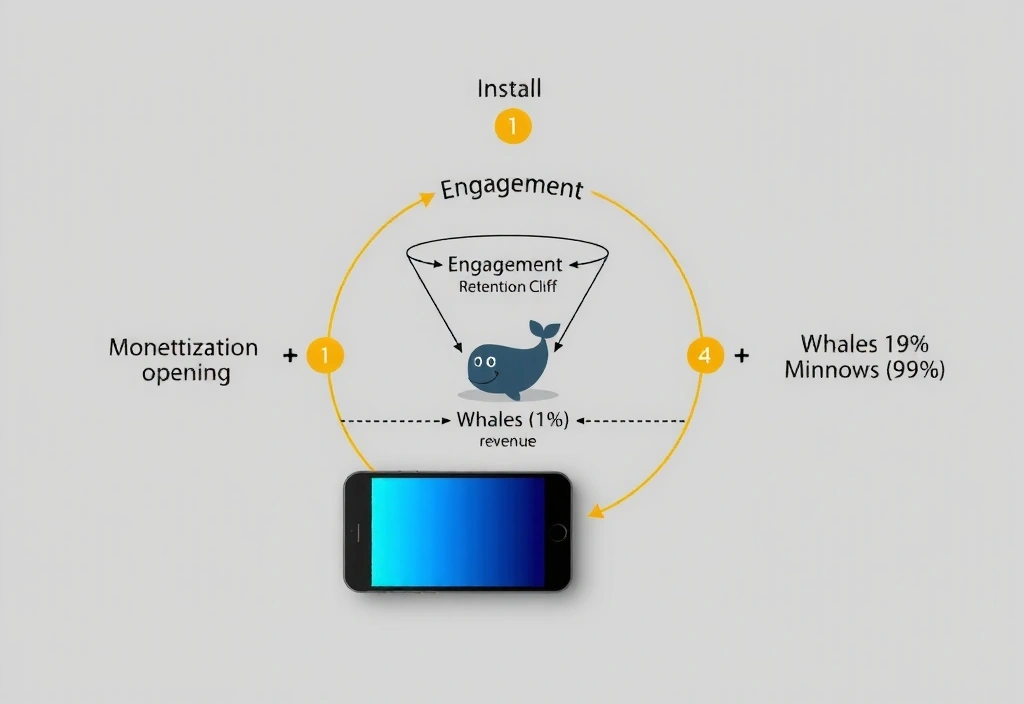
The Mobile Game Economy: Beyond the First Purchase
The initial install is merely the opening chapter. The true economic narrative of a mobile game unfolds in the silent hours after the download—a complex interplay of retention, perception, and perceived value. Most developers optimize for Day-1 revenue, neglecting the structural decay that begins with the 72-hour retention cliff. This is not a user failure; it is a design failure. The game's core loop must offer value that extends beyond the transactional.
"The whale exists not because they are rich, but because the game provided a narrative worth investing in—long before the purchase screen."
Lead Game Economist
The "Whale vs. Minnow" paradox is often misdiagnosed as a revenue issue. In reality, it's a community and content issue. A healthy ecosystem sustains both. The minnow (the 99% of players) provides social proof, competition, and content generation. The whale provides disproportionate revenue. The danger lies in designing for the whale alone—implementing pay-to-win mechanics that poison the community well. The strategic repositioning of a battle pass from a "paywall" to a "seasonal narrative arc" is a case study in this shift: it values the player's time and emotional investment, not just their disposable income.